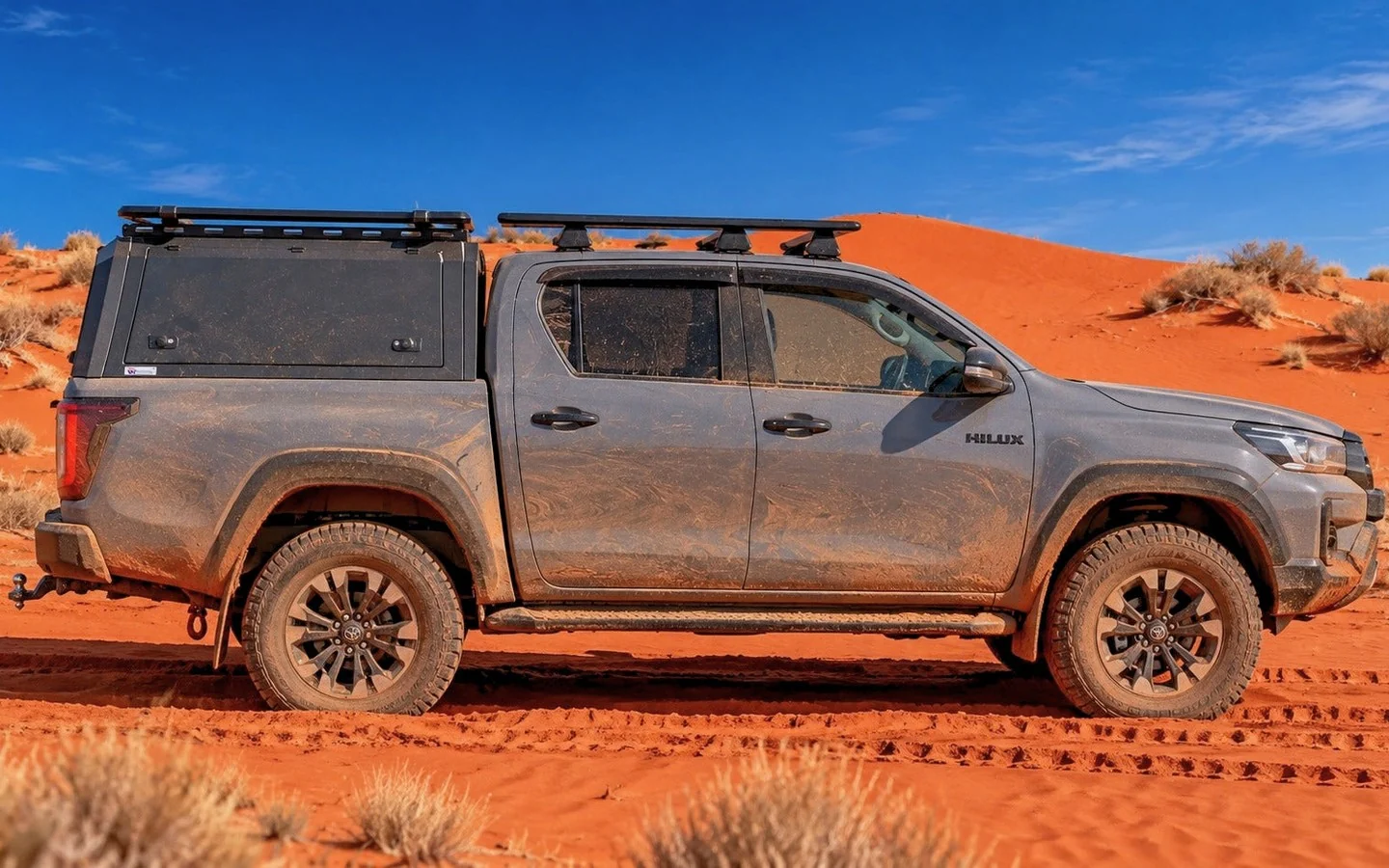
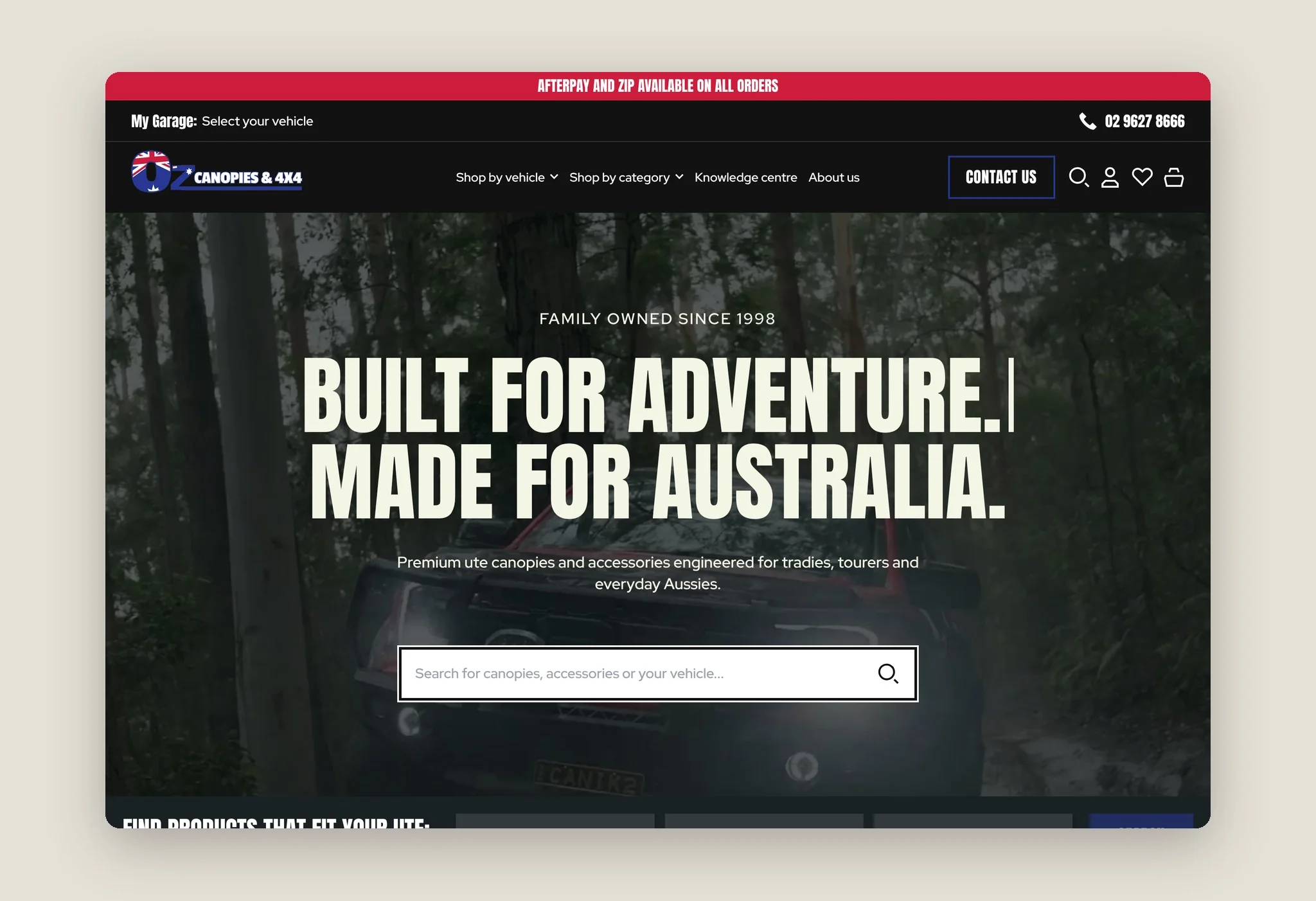
Oz Canopies & 4×4 is a family-owned Sydney business, founded in 1998, that sells ute canopies, roller shutters, towbars, bull bars, roof racks and other 4×4 accessories across Australia. Mgroup is moving the store from WooCommerce to Shopify with a custom theme built from Figma designs, a custom shop-by-vehicle app and a full data migration. The store sells across Australia, with Afterpay and Zip at checkout.
Project at a glance
New project: the Shopify store is launching in November 2026, and results will be added after launch. More on our Shopify migration service.
Selling vehicle-specific parts on Shopify
Every canopy and accessory fits specific makes, models and series, and shoppers need to know a part fits before they buy. The old WordPress site also held years of guides, customers and orders that had to move to Shopify without losing search traffic.
How we approached the Oz Canopies & 4×4 migration
Mgroup took the store from discovery to launch in five steps.
- Discovery, June 2026 Figma file and design briefs for collection, product, vehicle, cart, guide and support pages.
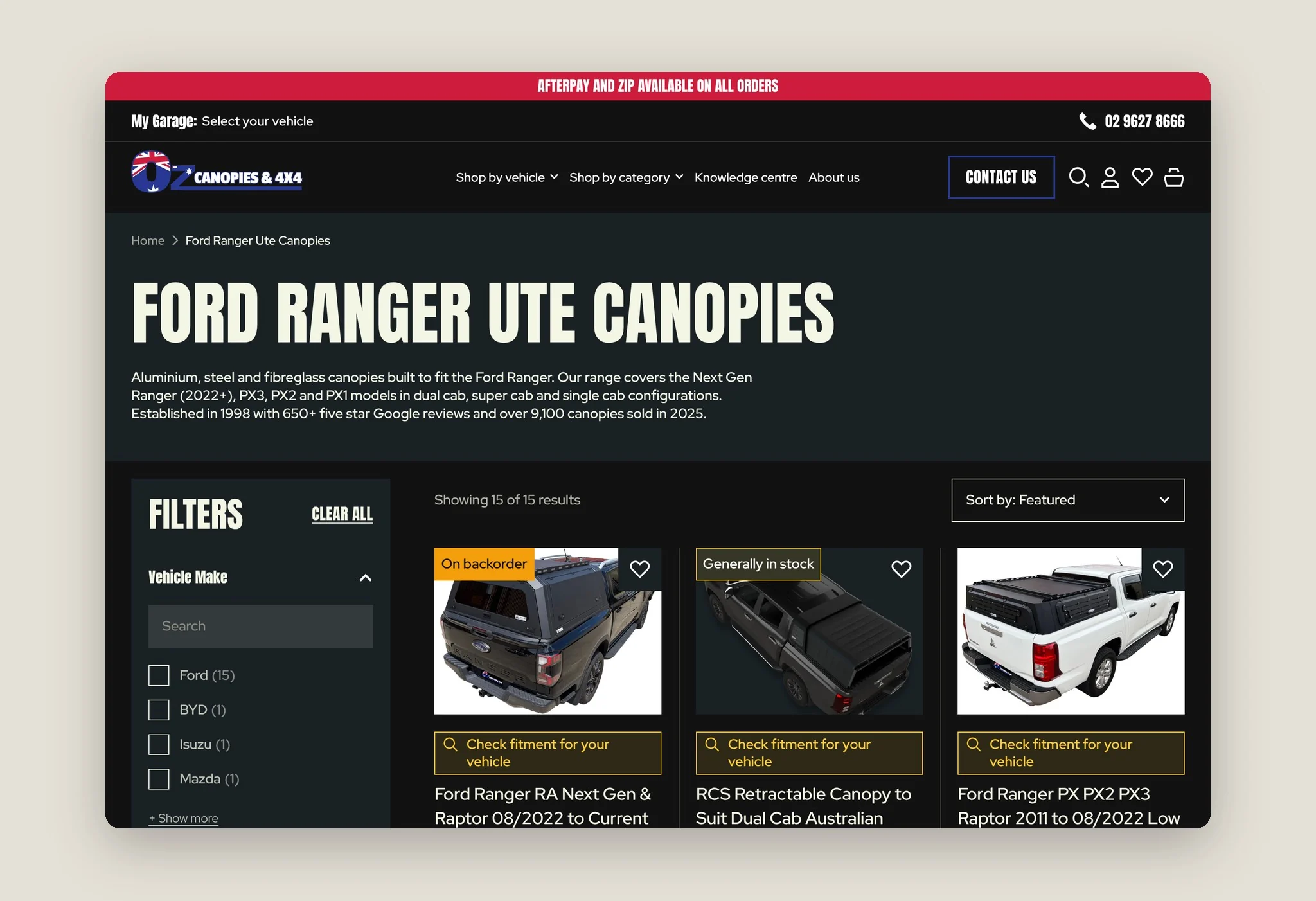
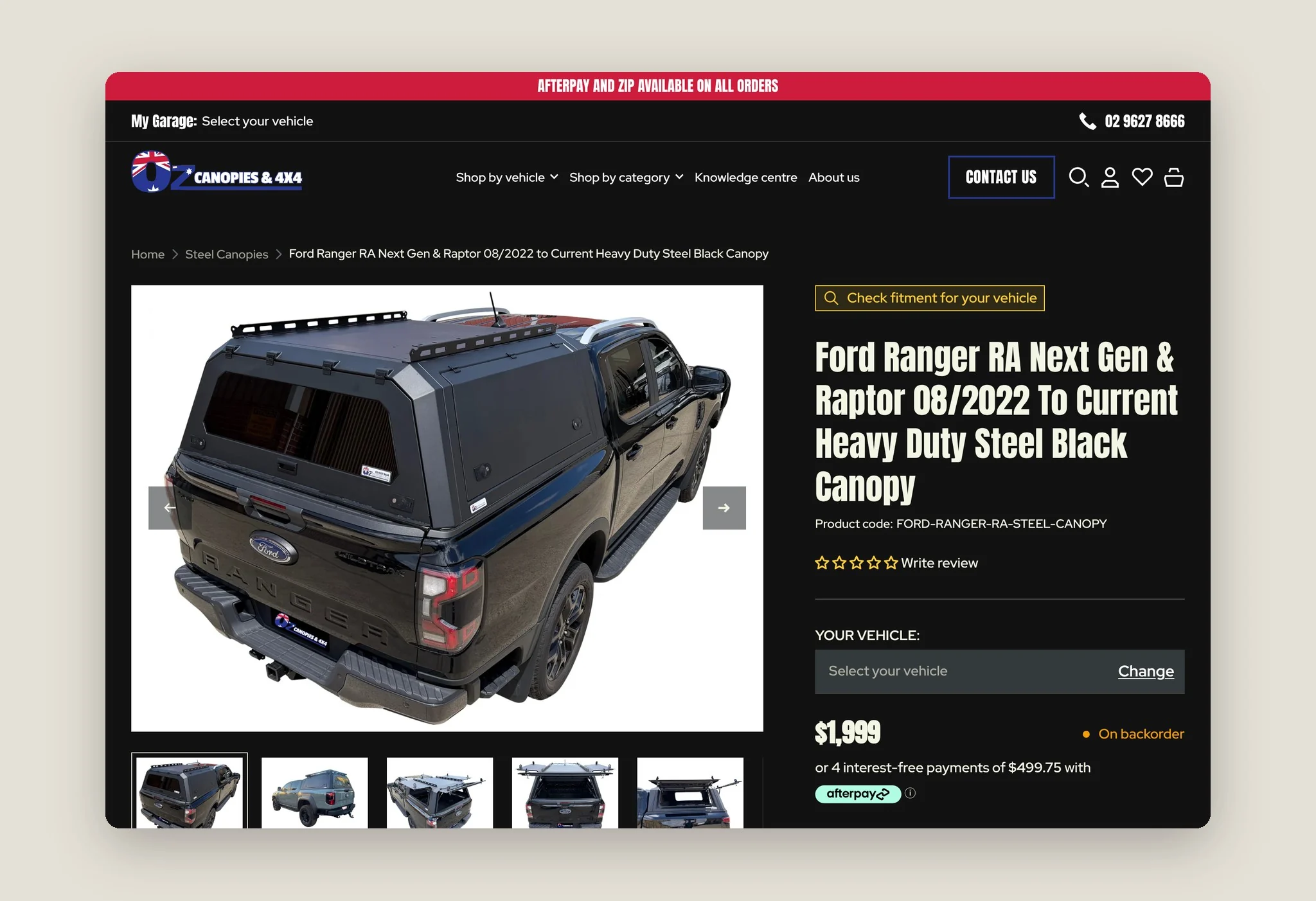
- Theme build, July–September 2026 Header and mega menu, homepage, collection, product, cart and support pages.
- Shop by vehicle, August 2026 A custom My Garage app and its integration across the theme.
- Migration, September–October 2026 Blog posts, customers, orders since 2020 and collections, with a link audit.
- Launch preparation, November 2026 Unleashed sync, Klaviyo flows moved to Shopify events and a Podium form test.
What we built: My Garage fitment app, Knowledge Centre and migration
My Garage: a custom fitment app
Every part fits specific makes, models and series, and the store needed one place to manage that data.
An embedded Shopify app with a vehicle dictionary (make, model, series, configuration), a product fitment editor that writes fitment metafields with bulk assign, and an app proxy that saves the logged-in shopper’s garage.
The team manages fitment in Shopify admin, and shoppers keep their vehicle between visits. More on custom Shopify apps.
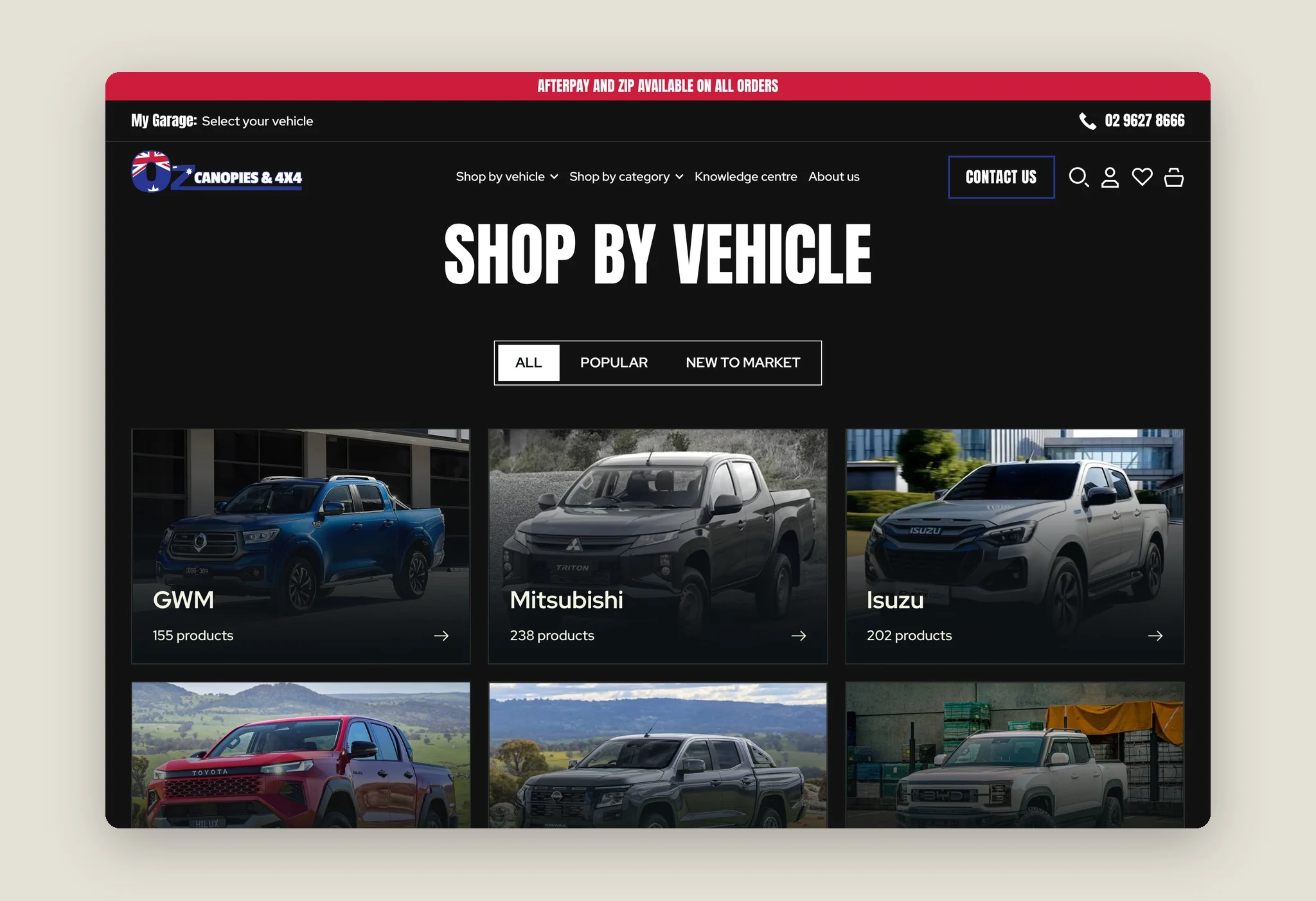
Vehicle selector across the store
Shoppers must know a part fits before they add it to the cart.
Vehicle selectors in the hero, mega menu, header, cart and product pages, fitment filters in Search & Discovery, fits-your-vehicle badges, a compatibility table on product pages, and vehicle brand and model pages with SEO text.
Shoppers pick their vehicle once and see what fits everywhere in the store.
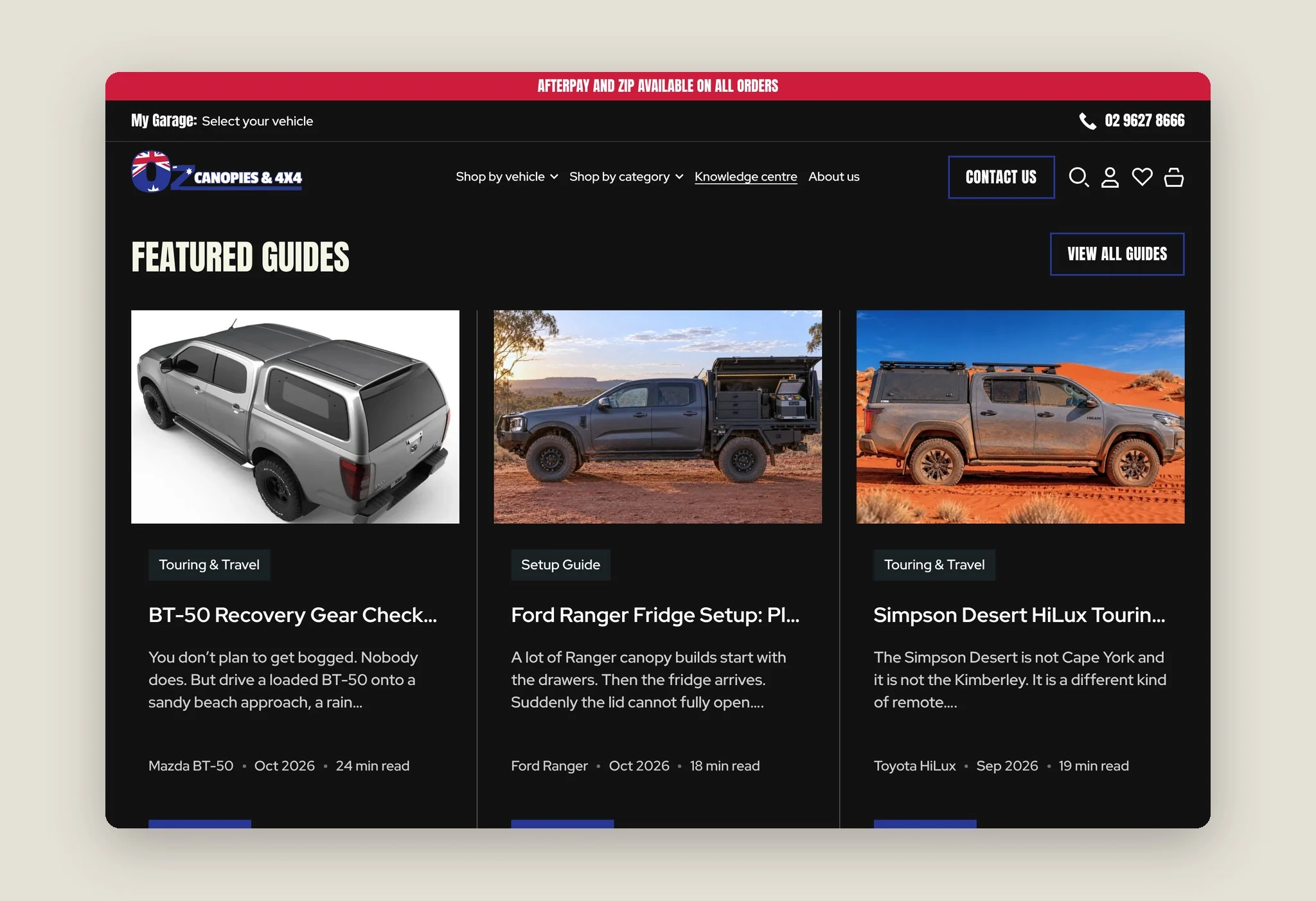
Knowledge Centre for guides
Around 200 guides had to move without creating duplicate content.
A guides hub and article template with a movable quick-answer box and editable H2, FAQs as real H2 and H3 headings with FAQPage schema, and a support card that can be switched per post.
Guides answer buying questions and stay distinct pages for search.
Migration without losing search traffic
Years of blog posts, customers and orders lived on WooCommerce.
Blog posts moved with their meta and alt text and 301 redirects from old URLs; customers, orders back to 2020 and collections were migrated, and an audit found 1,425 absolute links to the old site to fix.
Rankings and order history move with the store. More on our Shopify migration service.
Features that help shoppers decide
Big-ticket accessories need comparison and advice.
A compare page, wishlist, add-ons, “Need help choosing” forms, customer photos in the cart, Afterpay and Zip messaging and a B2B dealer registration form.
Shoppers compare and ask before they buy, and dealers have their own way in.
Apps and integrations on the Oz Canopies & 4×4 store
What each app does on the store.
-

My Garage: custom app built by Mgroup
Built by Mgroup for Oz Canopies & 4×4: vehicle dictionary, fitment editor and saved garages. More on custom Shopify apps.
-

Judge.me: reviews
Reviews, with a custom carousel built on the Judge.me API.
-

Klaviyo: email marketing
Email flows, moved from WooCommerce to Shopify events before launch. More on Klaviyo email marketing.
-

Afterpay and Zip: pay later
Pay later messaging on product pages, with Afterpay and Zip at checkout.
-

Big Post: shipping
Shipping rates and order tracking for large accessories.
-

Unleashed: inventory sync
Order and stock sync with the Unleashed inventory system, set up before launch.
-

Podium: chat and enquiries
Chat and enquiry forms, tested before launch.
About Oz Canopies & 4×4

Oz Canopies & 4×4 is a family-owned business in South Windsor, Sydney, that has fitted ute canopies and 4×4 accessories since 1998.