

Shopify is one of the largest commerce platforms in the world. In 2025 merchants sold $378.4 billion of goods through Shopify, 29% more than in 2024, according to Shopify’s 2025 annual report, and they sell from more than 175 countries.
Merchants choose it because it runs the whole store as a hosted service: hosting, security, checkout, payments and updates are Shopify’s job, not yours. The platform creates new features and updates regularly to keep your store pioneering in e-commerce. This piece will show you how Shopify works, what it does for businesses big and small, and why it makes technology simpler while boosting online stores' conversion rates.
What is Shopify?
Shopify is a complete commerce platform that helps entrepreneurs and businesses sell products online and in person. The platform started as a small startup and grew into a global commerce leader that now powers millions of businesses worldwide. The platform has become the backbone of e-commerce for countless brands looking for simplicity, scalability, and reliable features.

A simple definition of Shopify
Shopify works as an all-in-one commerce platform where anyone can start, run, and grow a business. The founders created it because they couldn't find a good e-commerce solution for their snowboard store. Now it offers a detailed suite of tools to build online stores and manage retail operations. The platform gives you everything you need to create custom stores without coding knowledge. Many people call it the "go-to e-commerce platform for startups" because of its easy-to-use interface and fair pricing.
Who uses Shopify and why it matters
Shopify serves businesses of all sizes - from side hustles to global retail giants. Its scale shows in the numbers: $378.4 billion in gross merchandise volume in 2025, up from $292.3 billion in 2024, from merchants in more than 175 countries.
Major brands that rely on Shopify include:
- Global corporations like Tesla, LVMH, Nestlé, and PepsiCo
- Over a million merchants across 175 countries
- Enterprise brands on Shopify Plus, which adds unlimited staff accounts, 200 inventory locations and up to 9 expansion stores
Businesses choose this platform because it offers flexibility, reliability, and tools needed to succeed in today's competitive market.
What does Shopify do for businesses
Shopify gives businesses essential tools to thrive in the digital economy. Merchants can create and customize their online stores with pre-designed themes while managing products, inventory, and customer relationships. The platform lets you sell everywhere - websites, social media platforms, marketplaces, and physical locations.
Shopify goes beyond simple selling. It offers detailed order tracking, customer communication tools, and valuable analytics that help businesses make smart decisions. The platform's POS system connects online and offline sales smoothly. Businesses can add more features through thousands of third-party applications in its app ecosystem. Shopify grows with its merchants and supports them from launch through scaling their operations.
How Shopify works
Knowing how Shopify works helps us understand why millions of entrepreneurs choose this platform. Shopify makes ecommerce simple. Anyone can start and run an online store without technical knowledge. Let's look at what makes Shopify tick.
Building your store with themes and AI tools
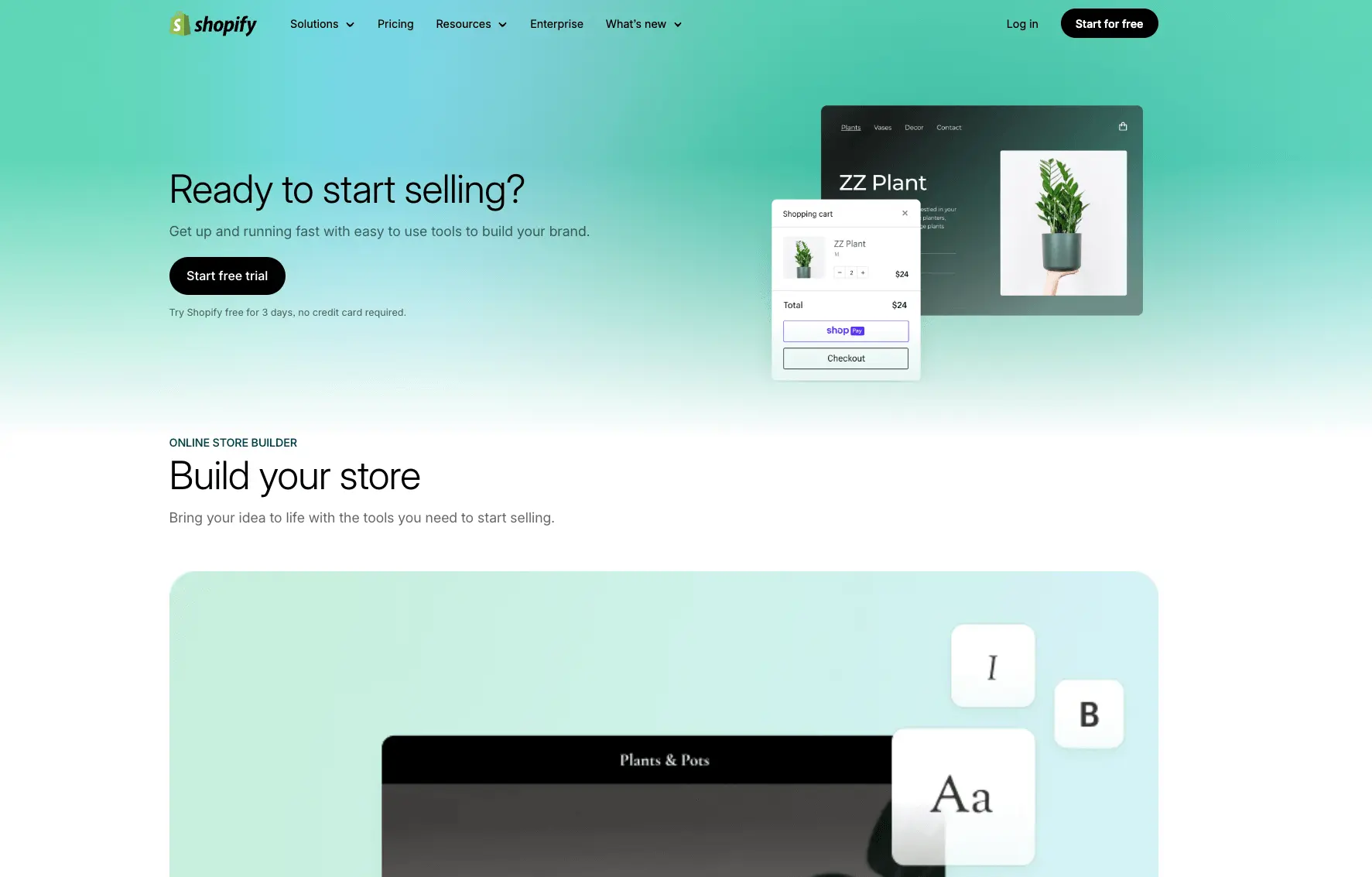
Shopify's accessible store builder comes with drag-and-drop features, so you don't need coding skills. You'll find hundreds of professional themes designed for different industries. The platform's AI capabilities through Shopify Magic help create customized storefronts and content. These AI tools write product descriptions, create headlines, and help edit images to lift your product photography quickly.
Finding and sourcing products
Shopify helps merchants find products in several ways. You can make your own products, buy from wholesalers, or employ dropshipping where suppliers handle inventory and ship directly to customers. The platform merges with services like Printful for customizable products and Collective to sell through retailer networks. Merchants can try different product strategies without spending too much upfront.
Managing orders, shipping, and payments
Shopify's dashboard brings all sales channels together in one place. Shopify Shipping gives you better rates with major carriers like USPS, UPS, and DHL. You can save up to 88% compared to regular retail prices. Shopify Payments removes Shopify’s extra fee for third-party payment providers and lets you take all major payment methods. The system tracks inventory with up-to-the-minute updates across all channels.
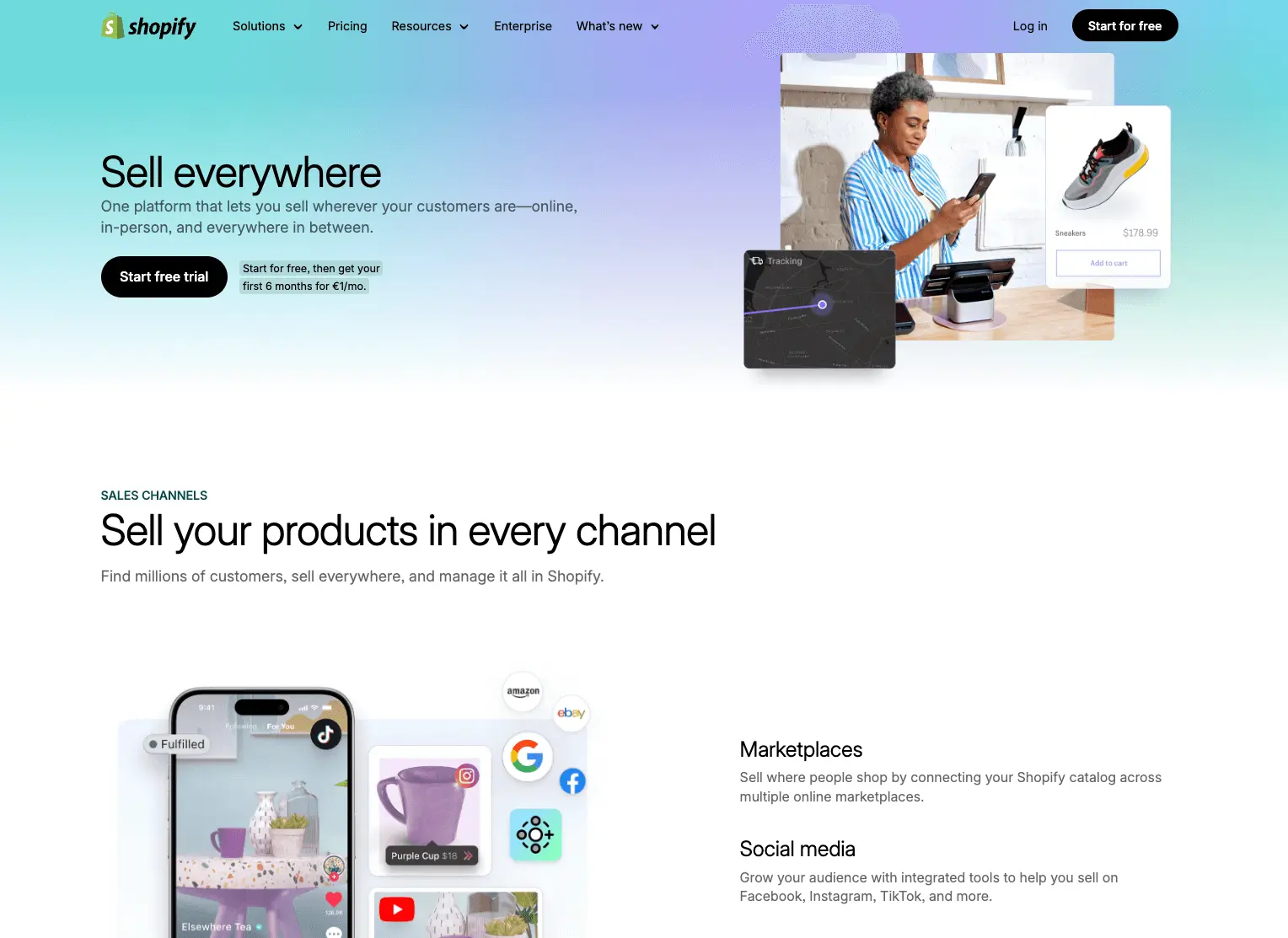
Selling across multiple channels
Shopify enables omnichannel selling through integrations with:
- Social media platforms (Instagram, Facebook, TikTok)
- Online marketplaces (Amazon, eBay, Walmart)
- Google Shopping and other search platforms
Merchants can reach customers wherever they shop. The platform syncs inventory and orders across all platforms from one dashboard.
Using apps and integrations to expand features
The Shopify App Store has thousands of applications that add more features to your store. Third-party developers build most of these apps to improve marketing, conversion rates, store design, and order management. Shopify's Software as a Service (SaaS) model means cloud-based integrations stay current. The platform connects with services like Zapier to link Shopify with thousands of other apps and optimize workflows without coding.
Shopify SaaS
Shopify stands out as a perfect example of the Software as a Service (SaaS) model that revolutionized online selling for businesses. The platform started as a cloud-based solution that freed merchants from hosting and managing their own e-commerce infrastructure. This smart approach explains why Shopify became the go-to platform for over 5 million active websites worldwide, with 3.2 million sites in the US alone.
What is SaaS eCommerce?
SaaS eCommerce lets businesses access software through the internet instead of downloading it. The model differs from traditional setups because SaaS eCommerce providers host and own the software while users pay a fixed subscription rate. Shopify serves as the perfect example of this model. The platform takes care of all technical aspects—hosting, maintenance, updates, and security. This lets merchants focus on business growth rather than infrastructure management.
Benefits of cloud-based platforms
Cloud-based platforms like Shopify deliver advantages that leave traditional solutions behind:
- Budget-friendly: Merchants only pay for resources they need instead of investing in expensive hardware. This cuts down upfront expenses and maintenance costs by a lot.
- Scalability: Business needs change, and cloud resources adapt easily, especially during traffic spikes. Your site stays up and running during peak times like holiday sales without manual adjustments.
- Automatic updates: Shopify handles all updates without manual patching, downtime, or business disruption. New features roll out every 6 months.
- Improved security: The platform comes with built-in security features including SSL certificates, secure payment gateways, and PCI DSS compliance.
Why Shopify's SaaS model is future-proof
Shopify's SaaS architecture tackles key challenges that make it last for the long haul. The platform's fully managed model eliminates server maintenance and manual upgrade costs. There's another reason for Shopify's continued growth - thousands of engineers work round the clock on updates to keep the platform ahead of e-commerce trends.
The SaaS model helps businesses by making e-commerce accessible through budget-friendly subscription plans. Small businesses and startups can enter the online market without huge upfront investments. Larger operations can use Shopify Plus, which applies the same SaaS principles with boosted capabilities.
Shopify simplifies tech
Shopify's innovative approach has reduced many technical barriers that once stopped entrepreneurs from starting online stores. Many businesses want to know why Shopify has become so popular. The answer lies in its ability to remove technical complexities while keeping powerful capabilities. Shopify simplifies tech in four key ways that help anyone launch a successful online store.
No need for hosting or maintenance
Shopify's detailed hosting solution stands out by eliminating technical headaches. The platform offers free, reliable hosting with servers distributed globally to load your storefront quickly worldwide. Your business and customer data stay protected through automatic PCI compliance and SSL certification. The platform takes care of server maintenance, security patches, and infrastructure management. This lets your team focus on growth. Merchants get enterprise-grade reliability with 99.99%+ uptime guarantee without typical IT costs.
Drag-and-drop store builder
The platform's user-friendly store builder removes the need for coding knowledge. Users can customize their online store by moving elements like images, text boxes, and product grids around the page. Shopify's Online Store 2.0 upgrade improves this experience and helps create professional-looking pages in hours instead of weeks. Store owners save time and money they would have spent on hiring developers.
App ecosystem for added functionality
The Shopify App Store works as a powerful extension system with over 8,000 apps that improve store capabilities. Each app goes through a thorough 100-checkpoint review before appearing in the marketplace. Store owners can add specialized features for marketing, inventory management, customer support, and other business functions without technical knowledge. Smart algorithms help merchants find apps that work well for similar businesses.
Omnichannel selling made easy
Shopify brings all operations together across multiple sales channels on one platform. Businesses can manage sales, inventory, and customer data through a single interface while delivering consistent experiences everywhere. The platform connects naturally with Instagram, Facebook, TikTok, and other popular marketplaces. It syncs products and tracks sales across these channels automatically. Shopify POS connects online and offline selling to create the unified shopping experience that today's customers expect.
Shopify improves conversion
Online stores face a vital challenge of turning visitors into customers. Shopify improves conversion with powerful features that make buying quick and easy. Every part of your store affects sales, and Shopify's specialized tools help you get the most from potential customers.
Best-in-class checkout experience
Shopify's checkout performs better than competitors by up to 36% in conversion rates. Shop Pay is at its heart, offering one-tap checkout that brings 91% higher mobile conversion and 56% higher desktop conversion compared to regular checkout processes. Customers can quickly complete their purchases with credit cards, digital wallets, and buy now, pay later options. This range of choices helps shoppers finish buying whatever their preferred payment method.
Mobile optimization and speed
Mobile commerce makes up 64% of all internet traffic. That's why Shopify puts mobile-friendly experiences first. Studies show even a half-second speed boost can lift conversion rates. So, Shopify themes naturally fit different screen sizes to look great on any device. The platform also helps make pages load faster—a vital factor since conversion drops by a lot with each second of delay.
Built-in SEO and marketing tools
Shopify has strong SEO features that help customers find your store through search engines. These built-in tools have:
- Automatic sitemaps and XML sitemaps
- SEO-friendly URL structure
- Meta tags support
- Auto-generated canonical tags
Personalized upsells and discounts
Smart upselling boosts Average Order Value while keeping shopping smooth. Shopify's app ecosystem lets merchants show customized product recommendations based on customer behavior. These tailored suggestions feel more like helpful guidance than marketing, creating an unmatched shopping experience that drives more revenue.
Abandoned cart recovery features
Over 70% of online shopping carts never make it to checkout. Shopify's recovery tools are a great way to get these sales back. The platform sends recovery emails with cart links that let customers pick up right where they left off. These emails win back 3.33% of lost sales—the highest recovery rate among email flows. Merchants can add discount codes to abandoned cart emails to encourage more purchases.
Shopify has the same goal as you: making your brand successful
What is Shopify at its core sets it apart from other platforms as a true partner in your success. The platform runs on your success, which creates a powerful connection rarely found in ecommerce solutions. This partnership shows up across Shopify's ecosystem in many ways that help your brand grow.
Revenue-sharing model lines up incentives
Why Shopify prioritizes merchant success becomes clear through its unique revenue model structure. Shopify cut its revenue share to 15% for app developers who earn beyond their first million dollars. This strategy brings quality apps to boost merchant capabilities. The platform creates an ecosystem where merchant growth benefits everyone by reducing developer barriers.
Support for scaling from startup to enterprise
Why Shopify excels is its knack for growing with your business. Companies pick Shopify because it offers adaptable security features and a rich app ecosystem. These tools let businesses try new things without piling up tech debt. Boston Proper switched to Shopify and added new features within minutes instead of months. Their conversion rates jumped 4% with Shopify Checkout. Lull saved 25% on infrastructure costs after moving from their custom tech stack.
Access to Shopify Capital and Credit
Shopify is SaaS that builds financial services right into its platform. Shopify Capital gives funding based on store performance without credit checks or personal credit score changes. Qualified store owners can get funds in just two business days. Jordan Lee from The Public Pet shared, "With Shopify Capital, our revenue increased by 40% to 50%". The platform also offers Shopify Credit, a pay-in-full business card with cashback on marketing, fulfillment, and wholesale purchases.
Global reach with Shopify Markets
Why Shopify leads the pack comes down to its strong international features. Shopify Markets lets you run multiple countries from one store while creating tailored experiences for each region. Customers can shop in their preferred language and currency, and celebrate local holidays with special promotions. Managed Markets (formerly Markets Pro), available to merchants in the continental US and to some stores in Canada and the UK, makes Global-e the merchant of record, so it handles local taxes, duties and payment methods for you. This helps businesses expand worldwide without complex infrastructure.
Shopify's innovation power is unprecedented
Why Shopify outperforms competitors comes down to their steadfast dedication to innovation. The platform's development cycle pushes merchants forward through continuous improvement rather than occasional updates. Businesses can access advanced tools at any time.
Thousands of engineers work on updates
What is Shopify if not a technology powerhouse? Their engineering team works together with AI tools, and about 70% of them keep taking GitHub Copilot. This collaborative effort produces over 25,000 code commits weekly and 1,300-1,400 pull requests daily. Shopify shows how SaaS eCommerce platforms can make use of engineering scale to deliver exceptional merchant experiences.
New features released every 6 months
Shopify shows major platform updates every six months that help merchants stay competitive. The Summer '25 Edition brought over 150 new features. The team optimizes performance between releases, which is impressive. They sped up admin search results by 7x and cut certain page load times from 20 seconds to just 400 milliseconds.
Being proactive with eCommerce trends
Shopify simplifies tech adoption by adding emerging technologies before they become essential. To cite an instance, what does Shopify do with AI? They launched tools like Shopify Magic for content generation and Shopify Sidekick for business intelligence. They created the first checkout integration in Roblox, leading the way in virtual commerce.
Innovation gives Shopify a long-term edge
Shopify improves conversion through its focus on performance and achieves 99.999% uptime during peak shopping events. Why Shopify maintains its competitive advantage comes from its R&D investment that surpasses industry peers. Shopify is SaaS with an evolving foundation. Merchants can stay competitive without managing technical complexity.
Conclusion
Our exploration shows why Shopify leads e-commerce today. The platform combines a user-friendly interface with robust technical infrastructure that makes it perfect for businesses at any growth stage. The SaaS model takes away technical hassles and delivers enterprise-level reliability that grows with your business.
Shopify offers something unique that sets it apart from competitors - complete alignment with your success. The platform runs on your success and creates a partnership instead of just providing a service. You'll find all the tools, support, and breakthroughs needed to succeed whether you're starting your first online store or growing a global brand.
The numbers tell a compelling story: $378.4 billion in gross merchandise volume in 2025, 29% more than a year earlier. Thousands of engineers work on new features every six months to keep your business on top of e-commerce trends.
Business owners can focus on creating great products and building customer relationships while Shopify manages complex technical aspects behind the scenes. The platform makes advanced e-commerce available to entrepreneurs whatever their technical background.
Shopify Plus development agency Mgroup welcomes discussions about your replatforming plans. We want to hear your ideas, business story, and current platform challenges — and show you how we can help. Our experts will respond within 24 hours after you complete the contact form to understand your goals and find the right solution.
Without doubt, Shopify is more than an e-commerce platform - it's a complete business partner dedicated to your growth. The platform keeps adapting and bringing breakthroughs that help merchants be proactive in the ever-changing world of online retail. Your choice of platform today shapes your business's sustained growth tomorrow.
FAQ: What is Shopify and How It Works
What is Shopify?
Shopify is a complete commerce platform that allows entrepreneurs and businesses to sell products online, in person, and across multiple channels. It offers everything needed to build, customize, and scale an online store without coding knowledge.
Why do businesses choose Shopify?
Businesses choose Shopify because of its reliability, scalability and ease of use. Merchants sold $378.4 billion through Shopify in 2025, and the platform supports both startups and global brands.
Who uses Shopify?
Shopify serves businesses of all sizes—from small startups and side hustles to large corporations. Millions of merchants in more than 175 countries use Shopify, from first-time sellers on Basic to enterprise brands on Shopify Plus.
How does Shopify work for businesses?
Shopify provides tools to design a store, manage products and inventory, process payments, and track orders. It enables omnichannel selling across websites, social media, marketplaces, and physical stores through its integrated POS system.
What makes Shopify different from other platforms?
Shopify’s SaaS model removes the burden of hosting, updates, and security, while providing automatic scalability and enterprise-grade reliability. Its ecosystem of 8,000+ apps and continuous updates every six months keep merchants ahead of trends.
How does Shopify improve conversion rates?
Shopify’s checkout is up to 36% more effective than competitors. Features like Shop Pay (with 91% higher mobile conversion), abandoned cart recovery, mobile-optimized themes, and built-in SEO tools help maximize sales.
What is Shopify Plus?
Shopify Plus is the enterprise version of Shopify, built to handle high-volume businesses. It adds checkout customization, unlimited B2B catalogs and staff accounts, 200 inventory locations, up to 9 expansion stores and higher API limits. Plans start at $2,300 a month.
How does Shopify simplify technology for entrepreneurs?
Shopify removes technical barriers by offering drag-and-drop store builders, automatic hosting and maintenance, built-in SSL certificates, and integrations with thousands of apps—allowing business owners to focus on growth.
Is Shopify a SaaS eCommerce solution?
Yes, Shopify is a SaaS (Software as a Service) platform. This means merchants pay a subscription while Shopify manages hosting, updates, and infrastructure—ensuring scalability, security, and budget-friendly access for businesses of all sizes.
How does Shopify support global selling?
Shopify Markets lets merchants sell internationally from one store, offering localized languages, currencies, and promotions. With Managed Markets (formerly Markets Pro), Global-e acts as merchant of record and handles local taxes and duties; it is available to merchants in the continental US and to some stores in Canada and the UK.
If you want to launch or scale with experienced Shopify experts, Mgroup supports design, development, optimization, and technical growth.