

Making the right choice between Ecwid and Shopify in 2025 can make or break your online business success. Shopify has grown into a powerhouse since its 2006 launch and now runs about 5.8 million websites worldwide. Ecwid came along in 2009 and has built up a base of 902,000 sites, taking its own unique path in online selling.
Let me break down what makes Ecwid special. Shopify builds online stores from the ground up, but Ecwid does something different. It gives you both a website builder and a widget you can plug into your current website. This key difference sets the tone for how these platforms match up against each other. Shopify aims to be your one-stop shop for building an online store. Ecwid shines by adding shopping features to websites you already have up and running.
The price tags tell another story. Ecwid fits better into tight budgets and even throws in a free starter plan - though you can only sell 5 products with it. Shopify costs more but packs more features into its plans. This piece dives deeper into which platform works best for different businesses. Small shops with limited budgets might lean toward Ecwid, while medium and larger businesses that need more customization options often find Shopify a better fit.
What is Ecwid? – A Look at Ecwid eCommerce Solutions
Learning about Ecwid vs Shopify helps you make the right choice for your online business. Ecwid brings unique advantages that set it apart from other platforms.
What is Ecwid and how does it work?
Ecwid, which stands for "eCommerce Widget," started in 2009. Lightspeed acquired it in 2021. The platform works differently from traditional solutions. It acts as an embeddable shopping cart system that adds a widget (a few lines of HTML code) to any website, social media profile, or multiple sites at once.
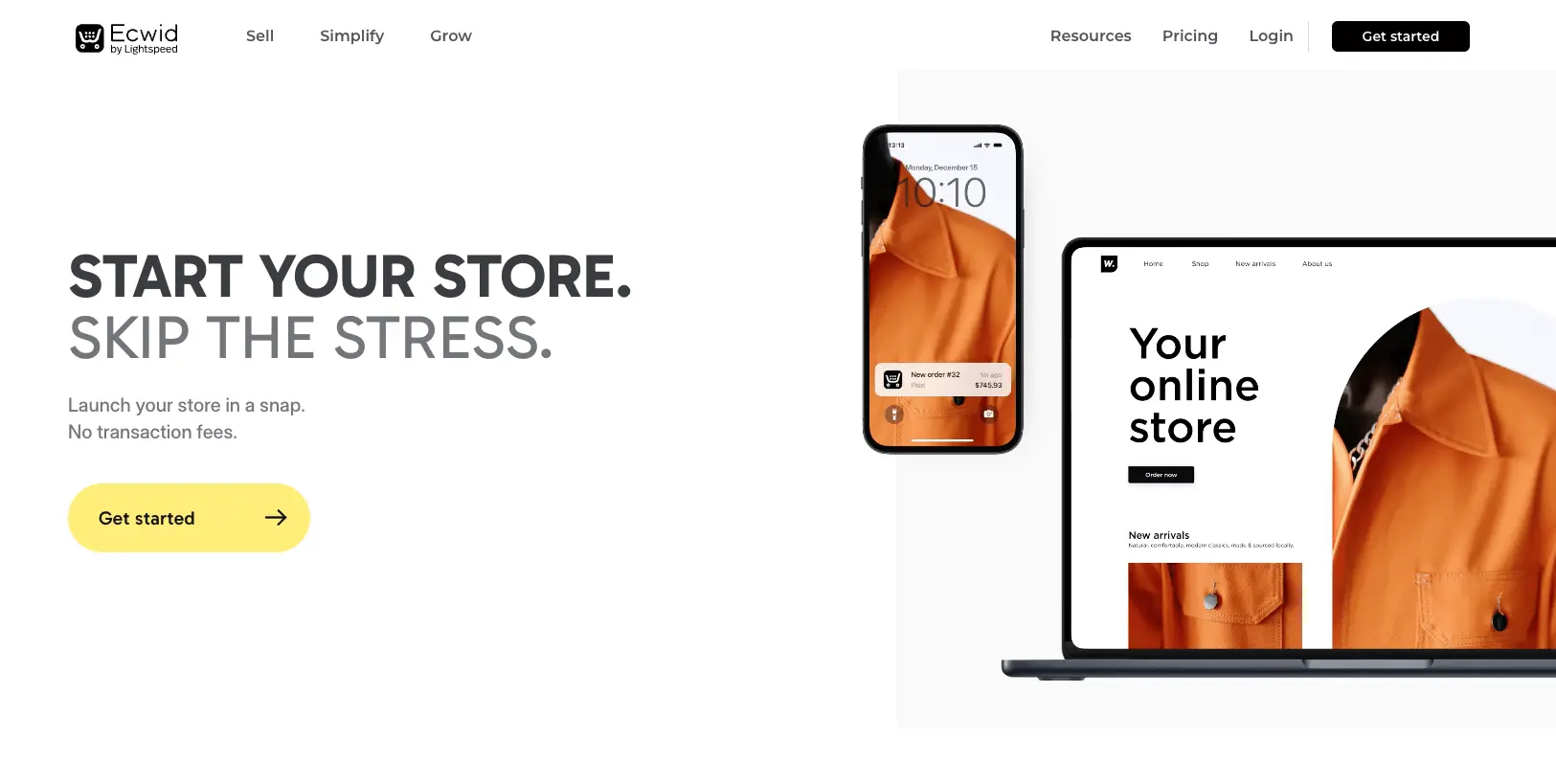
Merchants can sell their products on platforms of all types while managing everything from one control panel. The platform now powers about 900,000 online stores worldwide. It serves hundreds of thousands of merchants in 175 countries and supports 50 languages.
Key features of Ecwid eCommerce
The platform stands out in the Shopify vs Ecwid comparison with these key capabilities:
- Flexible product management - You can sell unlimited product options (color, size, material), digital products up to 25GB, and use bulk editing tools
- Multichannel selling - The platform blends with existing websites, social platforms, marketplaces, and mobile apps. It syncs inventory automatically
- Global commerce tools - You get support for 36 languages, automatic tax calculation (including EU VAT MOSS requirements), and regional payment providers
The platform also connects physical and online stores naturally through Lightspeed integration for point-of-sale features.
Ecwid reviews – what users are saying
Users praise Ecwid's simple setup in their ecwid reviews. One merchant called it "one of the smoothest experiences I've had in e-commerce". The platform holds a 4.4 out of 5 rating from users. They love its responsive customer service and clear site navigation.
Ecwid maintenance and long-term reliability
The Lightspeed acquisition brought mixed changes to ecwid maintenance. The platform keeps customer information safe with robust security (PCI DSS validated). Some longtime users report performance issues since the transition. The platform adds new features monthly as part of Lightspeed. Support varies based on your subscription level.
These Ecwid details matter if you're thinking about a migration to Shopify. They help you choose between these competing ecommerce solutions.
What is Shopify?
The Ecwid vs Shopify debate requires a good grasp of Shopify's foundational approach to make the right choice. Tobias Lütke transformed a simple snowboard equipment store into Shopify - a complete commerce ecosystem that now powers millions of businesses worldwide.
Shopify as a global eCommerce solution
Shopify has emerged as a powerhouse in the ecommerce space. The platform now powers more than 4 million active online stores across 175 countries. Its annual global sales exceed $680 billion, which sets it apart from ecwid ecommerce solutions. Merchants can tap into international markets easily with support for 20+ languages and 133 currencies. This makes Shopify an excellent choice for businesses looking to expand globally.

Merchants exploring ecwid alternative platforms will find Shopify's integrated approach stands out. Unlike what is ecwid which adds ecommerce features to existing websites, Shopify provides a complete store-building ecosystem.
Shopify core features and integrations
Shopify's feature set outshines ecwid pricing tiers in capabilities:
- Customizable storefronts with 100+ professional themes
- Built-in payment processing via Shopify Payments
- Unlimited product listings with inventory management
- Advanced analytics and reporting tools
- Extensive app marketplace with 8,000+ integrations
Ecwid development company services focus on widget integration. A Shopify development agency can exploit Shopify's reliable API architecture to create custom shopping experiences.
Shopify vs Ecwid – Shopify's advantages
Shopify costs more than basic ecwid pricing options but offers clear advantages. Businesses aiming for growth benefit from Shopify's scalability, unlike the ecwid maintenance issues highlighted in many ecwid reviews.
Merchants need extensive customization options. Shopify delivers through its theme framework and app ecosystem. The platform also gives businesses detailed marketing tools, built-in SEO features, email marketing, and social selling capabilities.
Businesses thinking about migration to shopify from platforms like Ecwid should focus on long-term growth potential. Ecwid excels at adding shopping features to existing sites. Shopify creates dedicated storefronts that drive ecommerce success.
Ecwid vs Shopify Features Comparison
The Ecwid vs Shopify platforms work quite differently at their core. Let's get into specific features that affect your daily operations and future growth.
Ease of use and store setup
The Shopify vs Ecwid platforms both offer user-friendly experiences with unique approaches. Ecwid's straightforward dashboard makes the setup quick and simple - users can build working stores in under 20 minutes. Shopify takes more time to set up because it's more complete, but new users benefit from better guided processes.
What is Ecwid stands out with its widget-based integration. You can add shopping features to existing websites by simply copying and pasting code. Shopify needs more time upfront but delivers a more unified experience.
Customization and design flexibility
Design options show clear differences between Ecwid vs Shopify. Shopify gives you about 170+ themes (12 free, others premium) while Ecwid has 40 templates. Shopify's themes are more customizable and polished, which typically leads to better conversion rates.

Ecwid ecommerce solutions let you make simple changes like adjusting product layouts and navigation menus, but stick to preset options. Shopify offers deeper customization options, though you might need to know Liquid code or work with a Shopify theme development agency.
SEO and marketing tools
Both platforms handle basic SEO well. Shopify gives you more control over things like AMP format, URL structures, and Core Web Vitals requirements. Marketing-wise, Shopify has built-in email marketing through Shopify Email. Ecwid ecommerce users need Business or Unlimited plans to access similar tools.
Multichannel selling (social media, marketplaces, POS)
Both platforms connect with social media and marketplaces. Ecwid maintenance has some limits - you'll need premium plans to sell on Instagram or TikTok. Shopify's POS system works seamlessly within its ecosystem. Ecwid users must integrate with third-party services like Square, Clover, or Lightspeed Retail.
Ecwid development company vs Shopify development experts
The developer ecosystem shows the biggest gap in the Ecwid vs Shopify comparison. An Ecwid development company can work with roughly 411 apps. Shopify experts have access to over 16,000 apps. This difference matters a lot for scaling businesses that need special features.
Growing businesses looking to migration to shopify often choose it because of this robust development ecosystem, especially when they need complex integrations or custom features.
Ecwid vs Shopify Pricing – Which is More Cost-Effective?
Most business owners look at price as the key factor while choosing between Ecwid vs Shopify for their online store. Here's a detailed look at how these platforms stack up in terms of cost.
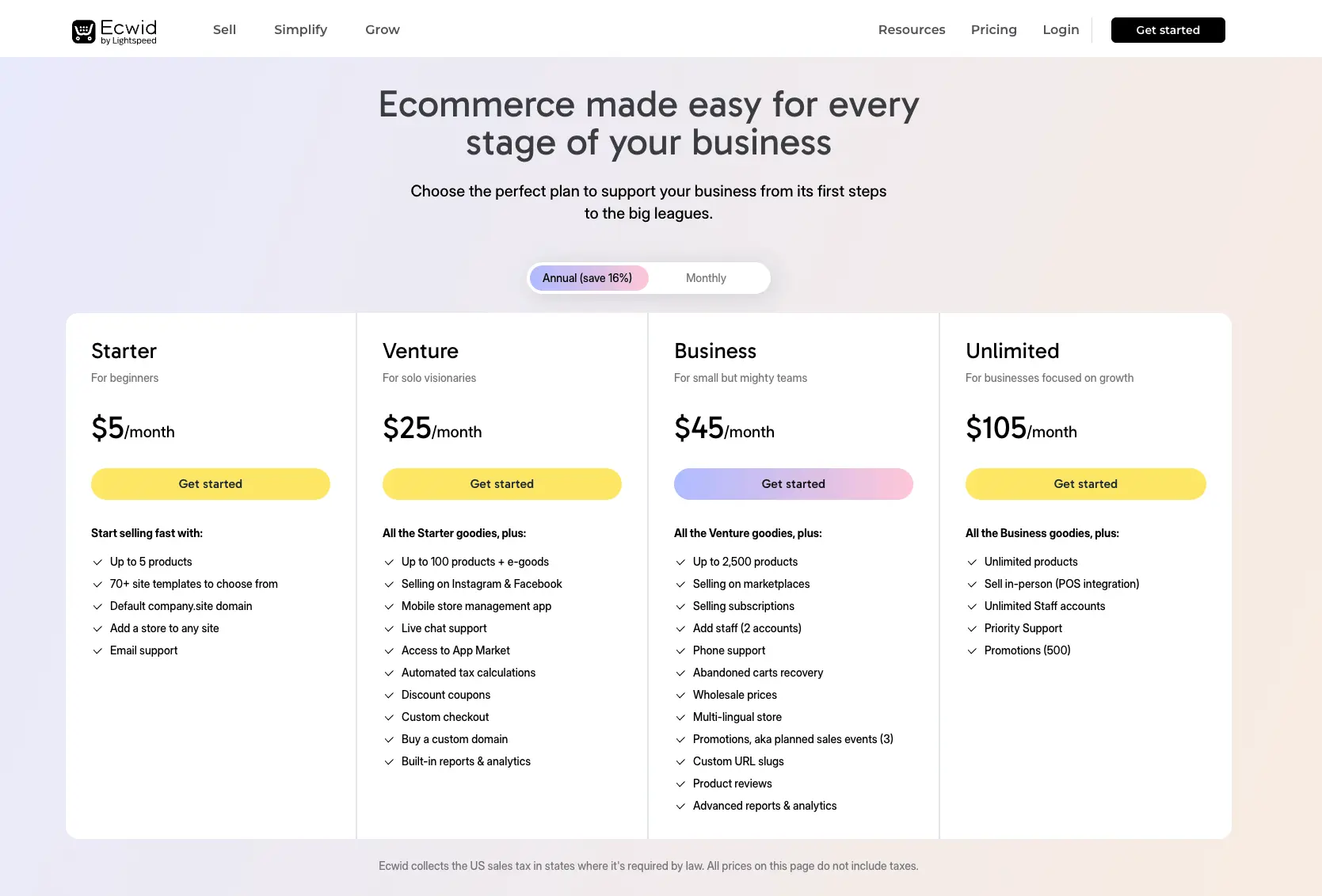
Ecwid pricing plans explained (Free, Venture, Business, Unlimited)
Ecwid pricing comes in four different tiers. The platform stands out with its free plan that lets you sell up to 5 products. Businesses looking to grow can choose from:
- Venture: $19/month ($14.08 monthly with yearly billing) for up to 100 products
- Business: $39/month ($29.08 monthly with yearly billing) for up to 2,500 products
- Unlimited: $99/month ($82.42 monthly with yearly billing) with no product limits
Ecwid ecommerce solutions shine because they don't charge any transaction fees on their plans.
Shopify pricing breakdown (Basic, Grow, Advanced, Plus)
Shopify vs Ecwid pricing looks quite different:
- Basic: $29/month (yearly billing) plus 2.9%+30¢ for online transactions
- Grow: $79/month (yearly billing) plus 2.7%+30¢ for online transactions
- Advanced: $299/month (yearly billing) plus 2.5%+30¢ for online transactions
- Plus: Starts at $2,300/month (3-year term) with special rates for high-volume sellers
Which platform gives small businesses better value?
New businesses with limited funds might prefer Ecwid ecommerce. All the same, as a Shopify development agency, we've seen how Shopify's unlimited product feature on every plan helps businesses grow better.
Shopify Plus Agency insights on scaling costs
Data from our experience shows that brands often save more money through agency partnerships than with in-house teams. This approach helps businesses:
- Cut down on full-time staff costs
- Adjust resources based on needs
- Get expert help when needed
- Save money on tech infrastructure
Businesses that want to migration to shopify should look at both current and future pricing impacts.
Pros and Cons of Ecwid eCommerce
The Ecwid vs Shopify comparison reveals strengths and limitations that help you choose the right platform for your business. A closer look at Ecwid's features gives valuable insights to e-commerce entrepreneurs.
Advantages of Ecwid eCommerce solutions
Ecwid ecommerce stands out with its affordable pricing model. The platform's free starter plan lets you sell up to 5 products. Small business owners love Ecwid pricing because it costs less than competitors at every level. Setting up your store takes minutes - just add a few JavaScript or HTML lines to your website.
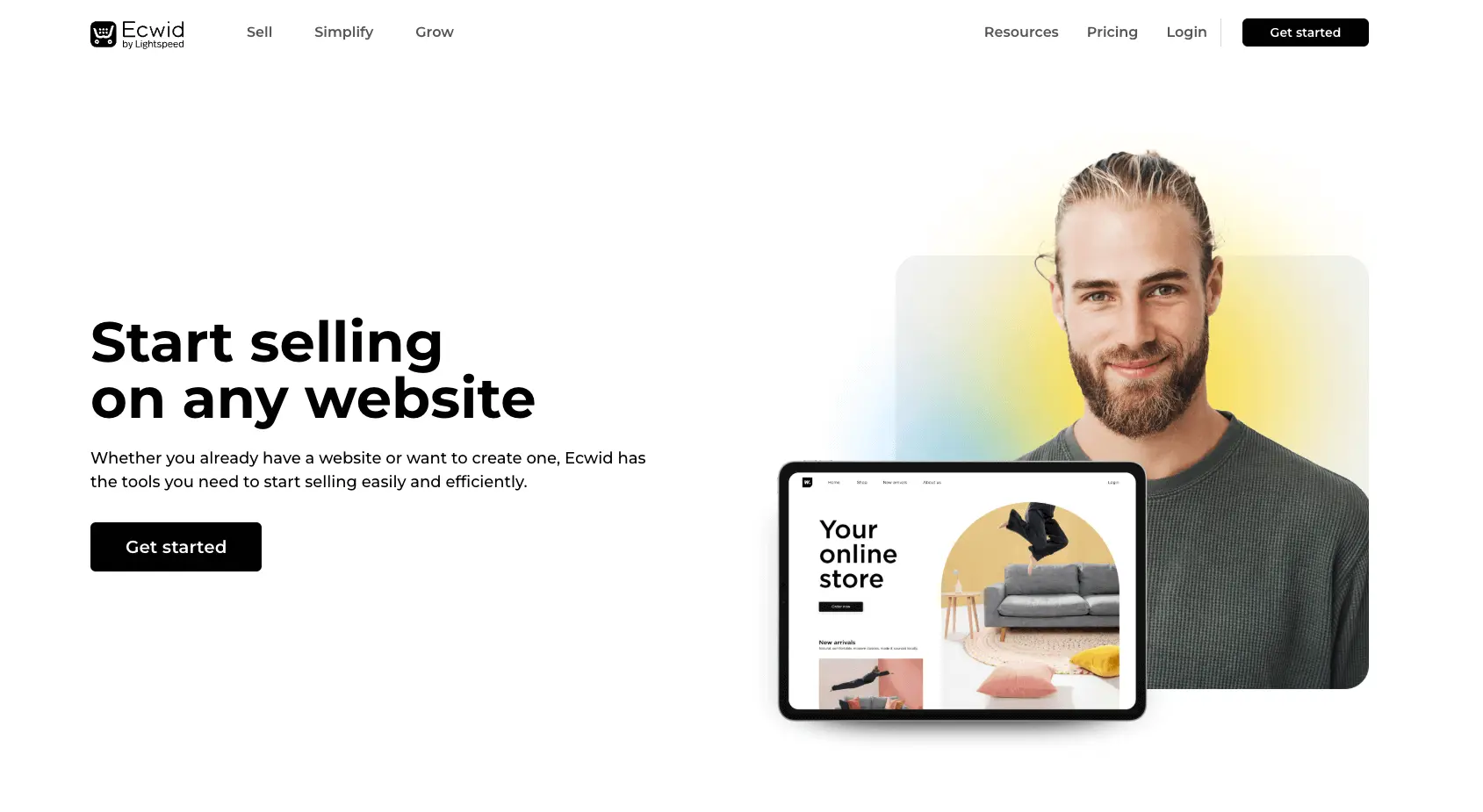
Your ecwid eCommerce solutions store adapts perfectly to any screen size. The platform's POS system lets merchants take payments anywhere using their mobile devices.
Limitations of Ecwid for growing businesses
Ecwid maintenance comes with its share of challenges. The platform's SEO tools need work - you can't modify product URLs or add alt text to images. These restrictions often lead businesses to migration to Shopify.
Ecwid reviews point to customization as a pain point. Store owners need CSS knowledge to make detailed design changes. High-volume stores might run into speed issues and their websites could crash.
Ecwid alternative options if you outgrow the platform
Our experience as a Shopify development agency shows that Shopify vs Ecwid comparisons favor Shopify for scaling businesses. Expert analysis ranks Shopify as the top Ecwid alternative with better features and integration options.
Pros and Cons of Shopify eCommerce
Let's think over the Ecwid vs Shopify landscape by looking at both platforms' strengths and weaknesses. Shopify is a 15-year old powerhouse that works great for businesses with big growth plans. But there's more to think about when we explore this platform.
Advantages of Shopify for scaling brands
Shopify handles high-volume operations smoothly without performance issues. Your store stays responsive even during busy sales periods like Black Friday thanks to dedicated server resources. The platform's multi-currency and multi-language features help businesses tap into global markets easily.

Shopify Flow is another game-changer that automates repetitive tasks like order tagging and inventory management. The platform gives you complete control over branding and user experience with its extensive customization options.
Limitations of Shopify for startups
Without doubt, new businesses face challenges with Shopify's pricing structure. Higher-tier plans come with increased monthly fees, and you might pay extra transaction fees if you don't use Shopify Payments. Advanced customization needs knowledge of Liquid, HTML, CSS, or JavaScript - this creates technical barriers for non-developers.
The process of moving from Shopify to other platforms can get tricky with complex data exports and theme redesigns.
Why many companies choose a Shopify development agency
Companies team up with a Shopify plus developers to tackle technical challenges head-on. These agencies bring fresh views and deep platform knowledge. They excel at creating custom solutions for complex requirements.
A migration to shopify becomes smoother with agencies that connect you to specialist networks. This helps you discover new features faster.
Ecwid vs Shopify – Which Platform Should You Choose?
The choice between Ecwid vs Shopify comes down to your business model and growth plans. Let's see which platform fits different types of businesses.
Who should use Ecwid? (freelancers, local stores)
Ecwid eCommerce solutions work great for specific business types. We found freelancers and creators love Ecwid's easy integration with their existing platforms. Local businesses with physical stores get great value from Ecwid eCommerce because of its excellent point-of-sale features.
Ecwid shines when you:
- Run a simple product catalog (less than 30k SKUs)
- Do business in one country/region
- Sell directly to consumers
- Want low technical upkeep
What is ecwid really about? The platform suits merchants who want simplicity and cost-effectiveness rather than complex customization.
Who should use Shopify?
Shopify emerges as the better Ecwid alternative for businesses ready to expand. Companies making over £1M in online sales usually outgrow Ecwid maintenance capabilities and need Shopify's adaptable features. Businesses that want multi-currency support and global reach benefit from Shopify's reliable system.
Ready to boost your online store? Our team of Shopify development experts at Mgroup builds high-performing eCommerce stores that match your business goals.
Shopify Plus eCommerce agency recommendations
Enterprise-level operations can get great value by working with a shopify plus agency. Look for these qualities when picking an agency:
- Clear pricing with detailed quotes
- Success stories from past projects
- Customer reviews that highlight quick responses
- Strong communication throughout projects
Large businesses in the Ecwid vs Shopify debate often find Shopify Plus agencies are a great way to get help with complex migrations, headless commerce setup, or custom development work.
Ecwid Alternatives: The Best Options Compared
You might find better options for your business needs by looking beyond the Ecwid vs Shopify comparison. Let's get into how Shopify matches up against other potential Ecwid alternative options and see what is Ecwid compared to other eCommerce solutions.
Wix vs Shopify – a beginner-friendly option
Wix could be your answer if you find Ecwid maintenance challenging. It comes with a user-friendly drag-and-drop editor. The plans cost between $17 to $159 monthly when billed yearly. Wix shines with its excellent email marketing tools for product promotion. Shopify leads the race with 8,000+ apps while Wix has about 800 third-party integrations. Small stores that need creative freedom work well with Wix. Shopify works best for businesses ready to scale up.
Webflow vs Shopify – design flexibility vs functionality
Webflow gives you complete design freedom unlike Ecwid eCommerce solutions. Shopify keeps you more restricted with templates. Webflow boasts over 6,000 templates while Shopify has 249. Design agencies love Webflow. Shopify still leads in ecommerce features, especially for inventory management.
BigCommerce vs Shopify – scalability comparison
BigCommerce stands out when you look at Ecwid pricing against other platforms. It charges no fees on external payment gateways. Shopify converts 12% better than BigCommerce on average. Brands like Crossrope saw their revenue jump 90% after they switched from BigCommerce to Shopify.
Magento vs Shopify – enterprise-level solutions
Magento offers deep customization for businesses that outgrow Ecwid eCommerce. You need technical know-how to use it well. The enterprise version costs from $22,000 to $125,000 yearly. This makes it much pricier than Ecwid development company services. Shopify wins with clear pricing and round-the-clock support.
Our development experts can help you move to Shopify. We guide you through upgrades from Ecwid and help you choose between Magento vs Shopify, Webflow vs Shopify, Wix vs Shopify, or BigCommerce vs Shopify.
Conclusion
The Ecwid vs Shopify comparison shows your choice depends on your business needs and where you want to take it. Small business owners, freelancers, and local shops with basic needs will love Ecwid's simple approach and lower costs. The platform makes it easy to add online selling to your website without deep technical know-how.
Growing businesses should think over Shopify as their main Ecwid alternative. Shopify gives you better scaling options, more ways to customize, and a strong app ecosystem that helps expand operations. This explains why many businesses switch from Ecwid ecommerce to Shopify as they grow bigger.
The Shopify vs Ecwid choice boils down to balancing current costs with future growth. Ecwid starts you off with a free plan and cheaper subscriptions. Shopify needs more money upfront but gives you stronger features as your business grows.
Your technical needs are a vital part of this choice. Businesses that need lots of customization, advanced marketing tools, and selling across many channels will get more from Shopify's detailed ecosystem. Companies with simpler needs might find Ecwid does the job well.
Note that both platforms keep changing. Ecwid now belongs to Lightspeed, and Shopify adds new features constantly. The best platform today might not be your ideal choice tomorrow.
Team up with a trusted Shopify Plus agency and find out how a dedicated Shopify store development agency can reshape the scene of your eCommerce growth. Reach out today to talk about your project and let our Shopify app development services build the right solution for your business.
Think over your business model, what customers expect, and growth plans when picking between Ecwid vs Shopify. Both platforms work well for different types of businesses, but Shopify handles growth better than Ecwid. The right choice gives your business the tools it needs to succeed online.
FAQ: Ecwid vs Shopify
What is Ecwid and how does it work?
Ecwid (eCommerce Widget) is a platform that allows you to add online store functionality to an existing website through a widget, enabling product management and sales across websites, social channels, and marketplaces from one dashboard.
How does Shopify differ from Ecwid in building and managing a store?
Shopify is a full eCommerce platform with its own themes, apps, and dedicated interface, while Ecwid integrates into an existing website, offering lightweight sales functionality.
What are the pricing differences between Ecwid and Shopify?
Ecwid has a free plan plus Venture, Business, and Unlimited tiers. Shopify offers Basic, Shopify, Advanced, and Plus plans. Shopify costs more but includes broader features and stronger scalability.
When should a business choose Ecwid over Shopify?
Ecwid is a good choice for small businesses or site owners who want to quickly add eCommerce without high costs or complex setup.
When is Shopify a better option than Ecwid?
Shopify is better for growing brands that need flexibility, custom apps, advanced SEO, and international selling capabilities.
What are the main advantages and limitations of Ecwid?
Ecwid’s advantages are easy setup, affordability, and quick integration. Limitations include fewer customization options, limited SEO, and weaker support for large product catalogs.
What are Shopify’s strengths and drawbacks?
Shopify’s strengths include scalability, a large app marketplace, powerful features, and strong support. Drawbacks include higher monthly costs and possible additional expenses for apps.