

The Impact of Customer Service on Shopify Store Success
Customer service drives Shopify store success. Your response speed and effectiveness directly determine your bottom line when customers have product questions or order issues.
Exceptional customer service isn't optional — it's the foundation that separates thriving stores from failing ones. Every customer interaction shapes your reputation and revenue potential.
Why Customer Service Is Your Competitive Advantage
Products alone won't distinguish your Shopify store in today's market. Research shows 50% of U.S. consumers abandon purchases due to poor service experiences. Meanwhile, 7 in 10 shoppers spend 17% more with businesses that deliver consistent customer service.
Exceptional support builds trust that converts into loyalty. Customer service creates competitive advantage by solving problems while strengthening relationships. Research confirms 89% of customers make repeat purchases after positive service interactions.
Strong service foundation makes customer acquisition easier. Studies reveal 90% of Americans check customer service reputation before choosing where to shop. Satisfied customers become brand advocates—72% share positive experiences with six or more people.
Great customer service delivers value beyond issue resolution. Customer feedback reveals hidden problems that affect your entire store operation. Fix root causes instead of treating symptoms. This approach improves the shopping experience for every future customer.
Service excellence separates successful Shopify store from the competition. Your support quality directly impacts customer lifetime value and organic growth through word-of-mouth referrals.
Common Customer Service Pain Points on Shopify
Most Shopify merchants understand customer service importance but struggle with consistent delivery. These core challenges create barriers to exceptional support:
Disconnected data and fragmented systems - Customer information scattered across multiple platforms hampers service quality, with 40% of brands acknowledging their customer experience falls short because of data silos and legacy infrastructure. Shoppers notice when representatives lack complete order history or purchase preferences.
Lack of personalization - Only 24% of businesses successfully invest in omnichannel personalization, yet personalized customer service can improve online conversion rates by 8%. Generic responses fail to address individual customer needs effectively.
Slow response times - Customers expect immediate answers, with 90% rating prompt responses as important or very important for customer service inquiries. Many Shopify stores cannot meet this expectation during peak periods or outside business hours.
Knowledge gaps - Support representatives often lack the detailed product information or order context needed to resolve issues efficiently, which escalates customer frustration.
Diane von Furstenberg's experience demonstrates these challenges clearly. DVF's sales associates previously struggled with scattered customer information across multiple platforms, limiting their ability to provide personalized service. The brand implemented a unified approach through Shopify POS, giving staff instant access to complete customer profiles and dramatically improving service quality.
Shopify provides built-in solutions for these pain points. The platform includes omnichannel tools that eliminate data silos and endless aisle capabilities that prevent lost sales when products are out of stock. Strategic planning and thoughtful execution remain essential for effective implementation.
Optimizing the Foundations of Customer Support
Solid customer support foundations separate successful Shopify store from struggling ones. Strong support systems drive growth and retention—they're business requirements, not optional features.
Expert Shopify merchants understand this reality. Support excellence creates measurable results for your store's performance and customer loyalty.
Ensure Clear Communication Channels
Multiple customer contact options create stronger retention rates. Companies with omnichannel experiences retain 89% of customers, compared to just 33% for single-channel businesses.
Your Shopify support strategy needs these essential channels:
- Live chat for immediate assistance
- Email for detailed inquiries
- Phone support for complex issues
- Social media messaging for quick questions
- Self-service options for 24/7 help
Brandon Chopp, Digital Manager at iHeartRaves, explains that "Live chat is great because it provides customers with an immediate response—in contrast to email, which can sometimes take days to receive a reply".
Self-service capabilities matter more than ever. About 70% of consumers expect businesses to provide self-service options. A well-structured help center with frequently asked questions reduces Shopify support tickets while boosting customer satisfaction.
Make contact information visible across your store. Place it prominently on product pages, checkout screens, and order confirmation emails. Customers shouldn't hunt for ways to reach you.
Set Up Shopify’s Built-In Customer Support Features
Shopify provides powerful native tools for customer 24/7 support management. Shopify Inbox stands out as the primary solution—a free app that centralizes customer conversations. Your team gains essential capabilities:
- Manage messages from multiple channels
- Assign conversations to specific staff members
- Set up automated responses for common questions
- Track customer interactions over time
AI chatbots handle after-hours Shopify support effectively. These tools answer basic questions about shipping, returns, and product features using natural language processing. Conversations feel natural rather than robotic.
Create proactive resources to prevent issues before they occur. Develop clear, searchable policy documentation covering shipping, returns, and payment options. Place these resources where customers expect to find them—navigation menus, footer links, and product pages.
Shopify Flow automates routine communications as your store scales. Create workflows that handle common customer inquiries automatically. Your team can focus on complex issues requiring human expertise.
Some customers prefer direct contact despite excellent self-service options. Make escalation simple through prominently displayed "Contact Us" buttons and live chat options. This flexibility ensures every customer finds their preferred 24/7 support method.
Implementing Customer Service Tools for Efficiency
Your support foundation needs the right tools to deliver consistent results. Customer service quality matters — 80% of customers say customer service is as important as a company's products.
The next step focuses on selecting tools that scale your support operations effectively. Strategic tool implementation separates successful Shopify store from those struggling with customer satisfaction.
Third-Party Apps That Boost Support Quality
Shopify's native features provide the foundation, but specialized apps unlock advanced support capabilities. A quality helpdesk app centralizes all customer interactions in one place, eliminating platform switching frustration.
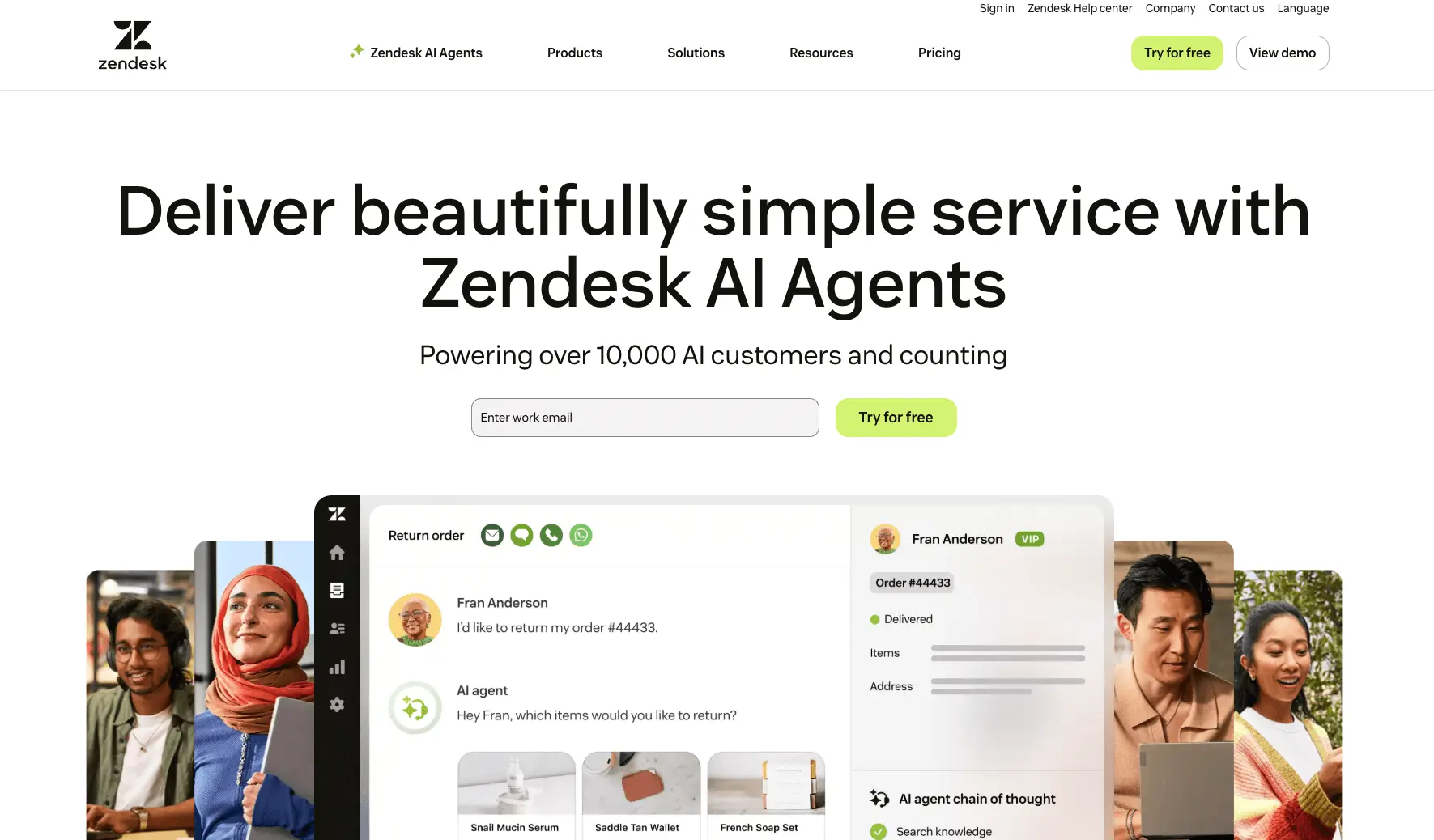
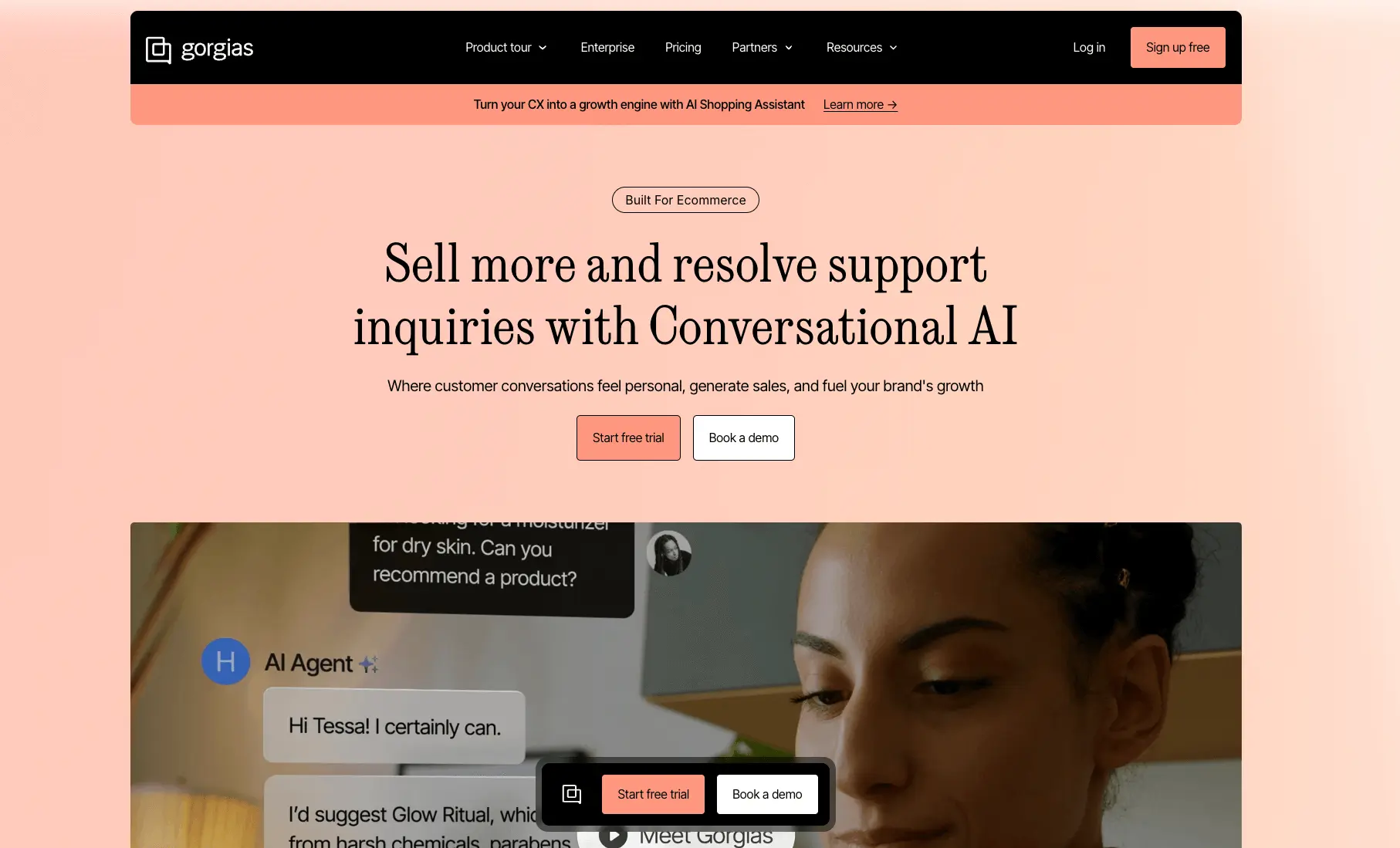
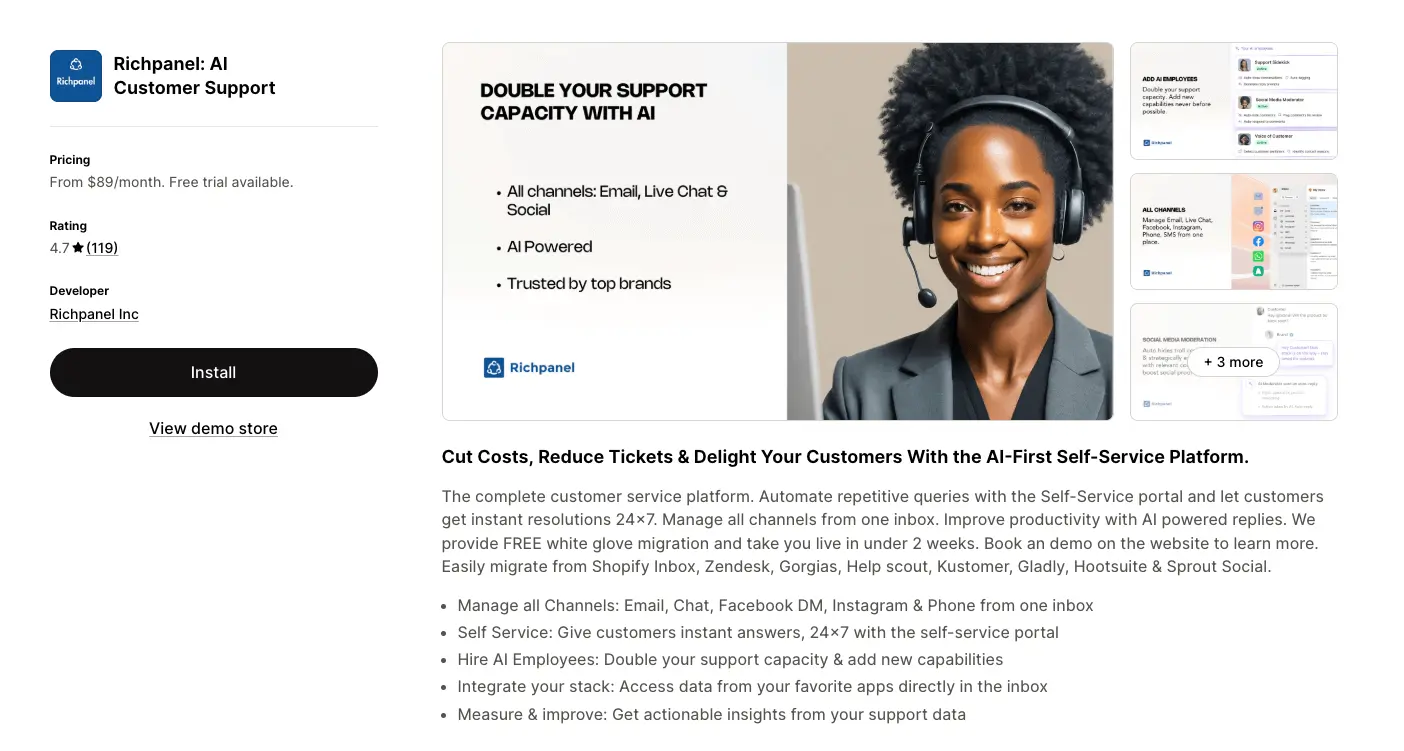
Top Shopify helpdesk solutions include:
- Gorgias – Features deep Shopify integration, macros, and automation rules
- Zendesk – Offers enterprise-level support with AI capabilities
- Richpanel – Excellent for managing direct-to-consumer brand Shopify support
- Helpscout – Displays order details, fulfillment status, and tracking numbers in the conversation sidebar
Choose apps that integrate seamlessly with Shopify. When customer information lives in separate systems, shoppers notice—and their loyalty suffers.
Live chat ranks third among customer preferences. Solutions like Tidio or Shopify Inbox allow you to greet visitors and resolve issues instantly. This immediate interaction reduces abandoned carts and improves satisfaction for customers shopping outside standard business hours.
Automate Where It Makes Sense
Automation delivers consistent, high-quality Shopify support at scale. Research shows up to 46% of customer queries can be handled adequately by AI-driven auto-responders.
Start by identifying specific pain points in your support process. If your team spends excessive time answering basic shipping or product availability questions, an AI chatbot provides the solution. Loop Earplugs uses Ada to handle common customer questions right on its homepage.
Automate post-purchase communication through:
- Automated order tracking to reduce "Where is my order?" tickets by 60%+
- Self-service return portals that let customers initiate returns without reaching your team
- Automated surveys to gather feedback and identify improvement areas
Introduce each tool individually and monitor its effectiveness before adding more. Train your support staff thoroughly on all automation tools so they understand how to interact with customers who have already engaged with automated systems.
Automation should enhance, not replace, human interaction. Make these tools feel like genuine assistance, not robotic responses. Strike this balance to create a 24/7 support system that handles routine tasks efficiently while allowing your team to focus on complex issues that truly require human attention.
Training and Empowering Your Support Team
Support team quality determines your store's service success. Tools alone cannot deliver exceptional customer experiences—your team's skills and knowledge make the difference.
Well-trained representatives handle customer interactions with confidence and expertise. The processes guiding their work ensure consistent service delivery across every touchpoint.
Build a Knowledgeable Team
Your support staff must master every product you sell. Deep product knowledge enables representatives to answer questions accurately and provide recommendations that build customer trust.
Effective training programs extend beyond product features to include essential skills:
- Communication skills – Teach staff to write clearly and speak effectively, avoiding the "curse of knowledge" that assumes customers understand technical terms
- Problem-solving abilities – Since no handbook can cover every situation, equip your team with critical thinking skills to handle unique challenges
- Conflict management – Train representatives to de-escalate conversations with frustrated customers, turning negative experiences into positive outcomes
Role-playing exercises deliver measurable results—have new team members shadow experienced staff, then practice handling common scenarios together. This mentorship approach allows newcomers to learn from seasoned experts while giving senior representatives opportunities for reflection and growth.
Establish Support SOPs (Standard Operating Procedures)
Standard Operating Procedures act as your support team's playbook, ensuring consistent customer experiences regardless of who handles the interaction. Well-documented SOPs save time, prevent mistakes, and maintain quality control.
Your customer service SOPs should include:
- Detailed steps for handling common scenarios like returns or technical issues
- Clear guidelines on communication tone and language
- Decision frameworks showing when to escalate issues
- Templates for frequent responses to maintain consistency
SOPs streamline operations by establishing clear escalation paths when representatives encounter unfamiliar situations and providing structured approaches for managing tough customer interactions.
These documents help with onboarding new team members efficiently. New hires can refer to SOPs to learn protocols at their own pace rather than requiring extensive classroom training. This systematized approach ensures everyone learns the same procedures consistently.
Empower your representatives with appropriate authority to solve problems independently. Setting specific parameters—like refund limits they can approve without escalation—allows them to resolve issues promptly. This autonomy improves customer satisfaction while building confidence within your support team.
Using Customer Feedback to Improve
Customer feedback drives your Shopify store's growth. Every review, rating, and support interaction provides insights that help you refine your offerings and enhance the shopping experience.
Monitor Reviews, Ratings, and Support Tickets
Track customer opinions across multiple touchpoints to identify improvement areas. Successful Shopify merchants actively monitor feedback from:
- Shopify store native reviews
- Third-party platforms like Google, TrustPilot, and Yelp
- Social media mentions (both tagged and untagged)
- Live chat transcripts and Ecommerce support tickets
- Post-purchase surveys
Analyze this data for patterns. Examine your reviews from a high level to notice recurring themes about your products, services, or overall experience. These patterns should directly inform your business decisions—view negative reviews as free product research that highlights opportunities for improvement.
Research shows that customers are two and a half times more likely to make additional purchases after a five-star experience compared to those reporting poor experiences. This makes actively managing customer sentiment a direct driver of revenue.
Encourage Feedback and Follow-Up
Getting meaningful feedback requires a proactive approach. Make the review process frictionless by sending automated emails or SMS messages post-purchase with direct links to review forms. Consider these strategic moments to request feedback:
- Immediately after successful transactions
- Following delivery confirmation
- After positive customer service interactions
- When resolving Ecommerce support issues
Close the loop after collecting feedback. Following up after customers respond to your surveys demonstrates that you value their time and opinions. Personalized responses to both positive and negative reviews show you're listening and build trust with existing and potential customers.
Make improvements visible when you implement changes based on customer suggestions. Use email marketing or your website to inform customers about improvements made due to their feedback. This completes the feedback cycle and fosters stronger loyalty by showing customers they have a genuine impact on your business.
Measuring and Improving Support Performance
Measuring support performance drives continuous improvement. Tracking the right metrics enables you to make adjustments that separate good service from exceptional experiences.
Track KPIs That Matter
Focus on metrics that directly impact customer satisfaction and business outcomes. Opinion-based KPIs reveal how customers perceive your service:
- Customer Satisfaction Score (CSAT) - Ask customers to rate their experience on a scale of 1-10. Scores above 80% indicate excellent service, while 60-80% is considered good.
- Customer Effort Score (CES) - Measures how much effort customers exert during interactions.
- Net Promoter Score (NPS) - Gauges customer loyalty by asking how likely they are to recommend your business.
Efficiency metrics reveal operational effectiveness:
- First Response Time - How quickly you respond to new inquiries.
- Average Resolution Time - The total time from ticket creation to final resolution.
- First Contact Resolution Rate - Percentage of issues resolved in one interaction.
Continuously Test and Improve
Continuous improvement means creating a cycle of planning, implementing, evaluating, and adjusting that never ends. This approach applies directly to customer support on your Shopify store.
Start with root cause analysis to identify underlying issues rather than treating symptoms. The "5 Whys" technique—asking why five times—helps pinpoint the true source of recurring problems.
Apply the Plan-Do-Check-Act (PDCA) cycle:
- Plan - Set specific support improvement goals
- Do - Implement changes on a small scale
- Check - Measure results against your KPIs
- Act - Standardize successful changes or begin again
Continuous improvement embraces small, incremental refinements. Even modest enhancements to your Shopify support processes yield significant results over time, creating customer experiences that consistently outperform competitors.
Conclusion: Great Customer Service Is a Shopify Differentiator
Customer service excellence separates successful Shopify stores from struggling ones. Your store's reputation, customer loyalty, and revenue depend on effective customer Ecommerce support execution.
The strategies outlined work as an integrated support system. Communication channels and Shopify's built-in features create your foundation. Third-party apps and automation boost efficiency while maintaining personal touch. Trained support teams following consistent procedures deliver on your service promises. Customer feedback collection and performance measurement complete the cycle.
Superior customer service creates unmatched competitive advantage. When shoppers encounter problems, your response determines whether they become one-time buyers or lifetime advocates. Every Ecommerce support interaction strengthens customer relationships rather than draining resources.
Many Shopify merchants struggle with disconnected systems, slow response times, and impersonal service despite having access to powerful tools. The difference between thriving stores and failing ones comes down to execution rather than technology. Your commitment to service excellence distinguishes your brand in ways competitors cannot copy.
Customer service excellence requires ongoing attention. Consumer expectations evolve constantly, and your support strategies must adapt accordingly. Treat customer service as a core business function worthy of investment, planning, and continuous refinement. This positions your Shopify store for sustainable growth in competitive markets.
If you’re looking for professional Shopify store development or reliable ongoing support, Mgroup is here to help. We are a full-cycle Shopify agency with years of experience delivering high-quality eCommerce solutions for brands across various industries. Whether you’re launching a brand new store, migrating from another platform, optimizing performance, or expanding to new markets, our team has the expertise to support your growth every step of the way.
Shopify Expert Agency Mgroup helps businesses optimize their Shopify customer service systems through expert development and strategic guidance. Our end-to-end solutions ensure your support infrastructure drives measurable results and customer satisfaction.
At Mgroup, we specialize in custom Shopify theme development, app integration, UX/UI optimization, speed enhancements, and technical support tailored to your business needs. We understand that each store is unique, so we take a strategic, personalized approach to every project. Our dedicated customer support staff is available to ensure your store runs smoothly and your team gets timely assistance. We understand that each store is unique, so we take a strategic, personalized approach to every project
Our goal is not just to build a store, but to help you achieve real, measurable results — more traffic, better conversions, and scalable infrastructure.
If you’re a brand, agency, or startup looking for a trusted Shopify partner, don’t hesitate to reach out. We’d love to discuss your goals and explore how we can work together. Start optimizing your customer service today — your future repeat customers will thank you. — whether it’s a small improvement or a full-scale launch, we’re ready when you are.